
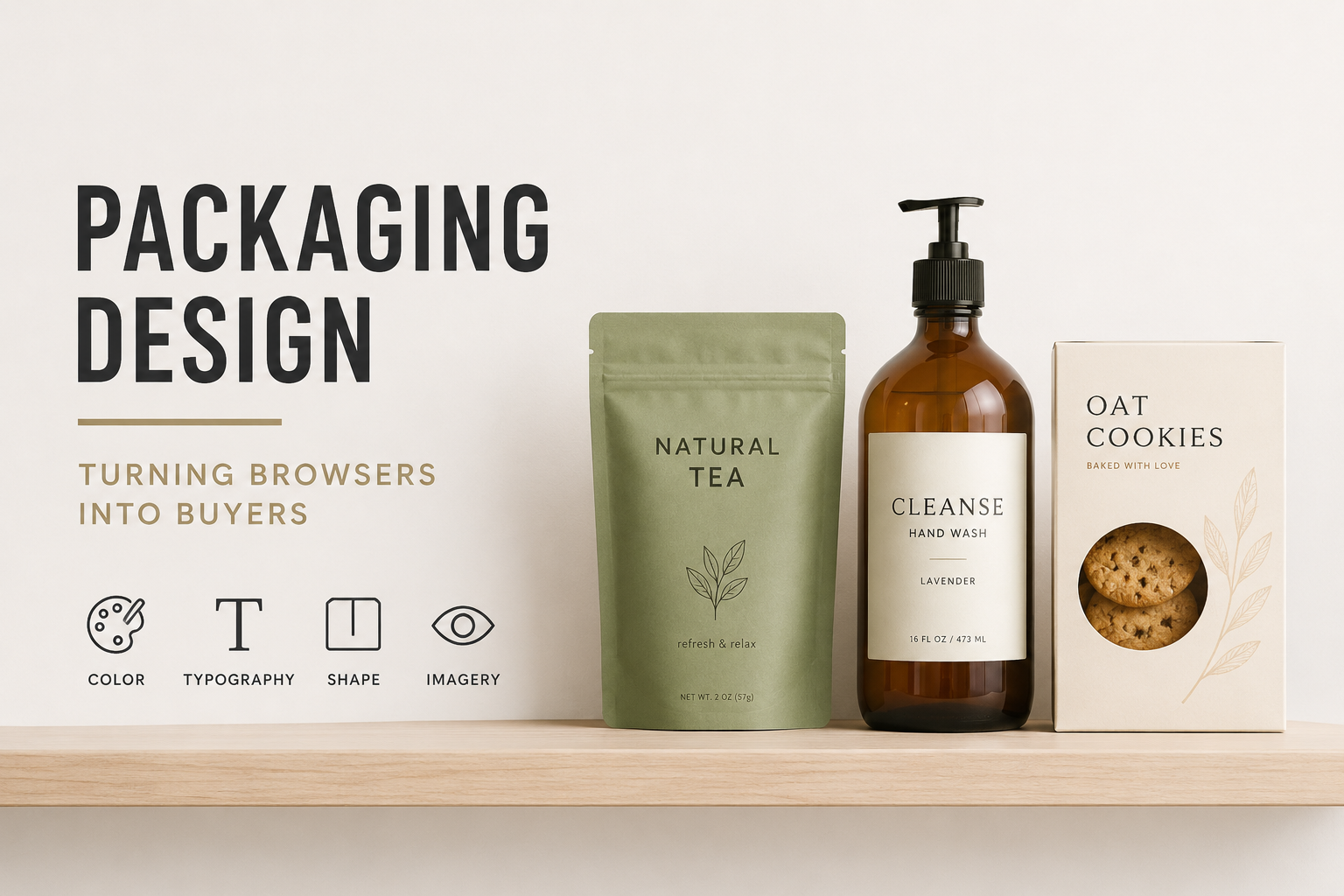
Packaging Design Basics: Turning Browsers into Buyers on the Shelf
When was the last time you selected an item from a store shelf? You likely didn’t read every word on every package. Something made you interested. Was it the color? Was it the packaging shape? Was it a label?
That is an example of effective packaging design.
What Packaging Design Actually Does
Good product packaging design does way more than just getting the product from the seller to the customer. It needs to be designed to capture the customer’s attention, establish trust, and clearly communicate the product’s story. You only get about 3 seconds of a customer’s attention for a product packaging cover to do all that.
Good product packaging design is also your product’s sales representative. Good design speaks for your product. Poor design speaks for your product too, and will turn customers away.
The Big Elements That Make It Work
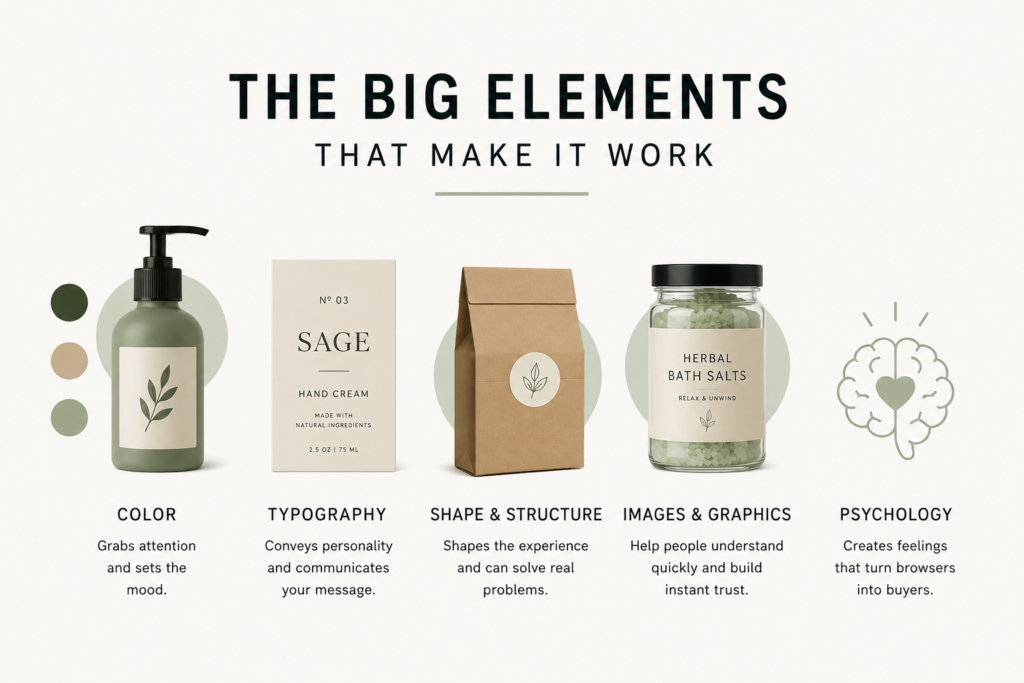
Let’s break down what goes into packaging that actually sells:
Color
Color is the first thing people see. Bright colors pull attention fast. Muted tones feel calm and high-end. Earth tones say “natural.” Pick a color that fits your brand story, not just one that looks cool to you personally.
Typography
The font you use says a lot. A handwritten style feels personal and warm. A clean, bold font feels modern and sharp. Mix the wrong font with the wrong product, and you’ve got a confused message that nobody wants to decode.
Shape and structure
Bottles, boxes, bags, containers, etc., are part of the packaging design. One honey company used beeswax for packaging. Once you finish the honey, you could flip it and burn it like a candle. It was waste-free and clever.
Images and graphics
Windows, illustrations, icons, and drawings. These all can help you understand what is inside the packaging without words. A window cut-out that shows the actual product builds trust quickly. People like to see what they’re buying.
Packaging Psychology
The truth about consumer packaging is that people buy feelings and not just products. A sleek shampoo bottle doesn’t clean your hair any better than the cheap one. But it feels like it might. And that feeling is worth real money.
Luxury packaging also uses layers. Tissue paper inside a box inside another box. Each layer builds excitement and turns buying a product into an experience worth remembering. That’s packaging psychology doing heavy lifting. Simple packaging can work the same magic. Clean white labels, minimal text, and one bold color can scream “premium” louder than a package covered in gold and glitter.
Practical Packaging Design Tips
Here are some solid ideas to get you started:
- Use every inch of space. The inside of a box matters too. A pretty pattern on the interior makes the whole thing feel more upscale.
- Let the product shine. If it looks great, you need to show it off. Don’t hide it behind heavy packaging.
- Be playful when you can. A fun illustration or clever concept sticks in people’s heads way longer than a boring label.
- Try texture. A rough or raised surface gives shoppers something to feel. Touch is a powerful thing.
- Tell a short story. Even three words on a label can connect with a buyer on an emotional level.
- Stay consistent. Your colors, fonts, and style should match across every product in your line.
Don’t Copy
Look at what your competitors sell and how they package it. Then go a different direction. Water usually comes in plastic bottles. One brand put it in a cardboard box. Same water. Completely different shelf appeal. People picked it up just to figure out what it was.
That curiosity is gold in retail packaging.
Keep It Simple
You don’t need stacks of cash to come up with a product design that actually sells. Your thinking has to be a little more refined to come up with something like this. You need to think about who your buyer is and the feeling you want them to have after buying your product. Everything else follows.
Consider that nice little tidbit, and put your product on the shelf away from everyone else. Take a step back and actively consider whether this is a product design you would actually like to buy.
If you buy it, you are well on your way.